Skip to product information
1 of 1

Books

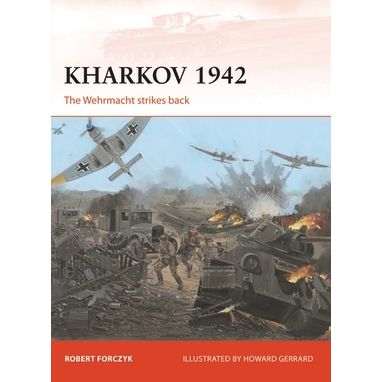
Kharkov 1942: The Wehrmacht Strikes Back

Kharkov 1942: The Wehrmacht Strikes Back

Regular price $0.00 CAD
Regular price Sale price $0.00 CAD
Sale Sold out
Shipping calculated at checkout.
Title
Description: The battle for Guadalcanal that lasted from August 1942 to February 1943 was the first major American counteroffensive against the Japanese in the Pacific, it also marks the high point of Japanese expansion and can justly be claimed as one of the major turning points of the Pacific War. While the troops of the US Marine Corps and later the US Army battled the Japanese occupiers on the densely jungled island of Guadalcanal, the US and Japanese naval forces fought a series of tightly contested battles in the waters nearby. The first of these, the battle of Savo Island on the night of 9 August 1942, saw the Japanese inflict a sever defeat on the Allied force, driving them away from Guadalcanal and leaving the just-landed marines in a perilously exposed position. This was the start of a series of night battles that culminated in the First and Second battles of Guadalcanal, fought on the nights of 13 and 15 November, that were narrowly won by US Naval forces and prevented the Japanese from reinforcing their troops on the island to any great extent, and heralded the turning of the tide in the battle for Guadalcanal. One further major naval action followed, the battle of Tassafaronga on 30 November 1942, when the US Navy once again suffered a severe defeat, but this time it was too late to alter the course of the battle as the Japanese evacuated Guadalcanal in early February 1943.This title will detail the contrasting fortunes experienced by both sides over the intense course of naval battles around the island throughout the second half of 1942 that did so much to turn the tide in the Pacific.
MSRP: 21.95
Book Series: Campaign
Volume: 254
Subject: Military History
Author: Robert Forczyk
About the Author: Robert Forczyk has a PhD in International Relations and National Security from the University of Maryland and a strong background in European and Asian military history. He retired as a lieutenant colonel from the US Army Reserves having served 18 years as an armour officer in the US 2nd and 4th infantry divisions and as an intelligence officer in the 29th Infantry Division (Light). Dr Forczyk is currently a consultant in the Washington, DC area.
ISBN-13: 9781780961576
Publisher: Osprey Publishing
Publication Date: 4/23/13
Number of Pages: 96
Binding: Paperback
Illustrator: Howard Gerrard
UPC: 9781780961576
Set: Osprey Books
Rarity: sealed
The battle for Guadalcanal that lasted from August 1942 to February 1943 was the first major American counteroffensive against the Japanese in the Pacific, it also marks the high point of Japanese expansion and can justly be claimed as one of the major turning points of the Pacific War. While the troops of the US Marine Corps and later the US Army battled the Japanese occupiers on the densely jungled island of Guadalcanal, the US and Japanese naval forces fought a series of tightly contested battles in the waters nearby. The first of these, the battle of Savo Island on the night of 9 August 1942, saw the Japanese inflict a sever defeat on the Allied force, driving them away from Guadalcanal and leaving the just-landed marines in a perilously exposed position. This was the start of a series of night battles that culminated in the First and Second battles of Guadalcanal, fought on the nights of 13 and 15 November, that were narrowly won by US Naval forces and prevented the Japanese from reinforcing their troops on the island to any great extent, and heralded the turning of the tide in the battle for Guadalcanal. One further major naval action followed, the battle of Tassafaronga on 30 November 1942, when the US Navy once again suffered a severe defeat, but this time it was too late to alter the course of the battle as the Japanese evacuated Guadalcanal in early February 1943.This title will detail the contrasting fortunes experienced by both sides over the intense course of naval battles around the island throughout the second half of 1942 that did so much to turn the tide in the Pacific.
View full details