Skip to product information
1 of 1

Books

Sopwith Camel

Sopwith Camel

Regular price $0.00 CAD
Regular price Sale price $0.00 CAD
Sale Sold out
Shipping calculated at checkout.
Title
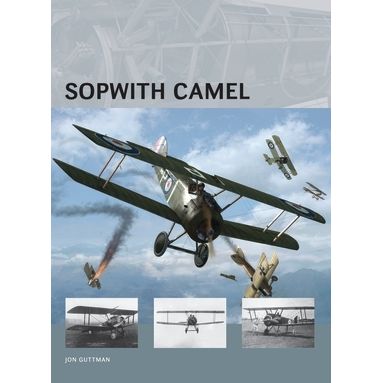
Description: A British icon of World War I aerial combat, just as the Supermarine Spitfire is for World War II, the Sopwith Camel might more aptly be compared to the equally iconic (if one is Japanese)Mitsubishi A6M2 Zero. A superb dogfighter in the hands of pilots who mastered its vicious idiosyncrasies, the Camel also packed a considerable punch for its day as the first British fighter with twin machine guns. It has been credited with the most aerial victories of any fighter type of the conflict, but that statistic is somewhat misleading - and further muddied by the heavy losses Camel units suffered in 1918, as higher performance types began to eclipse the plane. Nevertheless, Camels appeared on several battlefronts to the end of the war and beyond - during the Russian Civil War, for example - and performed remarkably well in a variety of other roles, including as a ground strafer, night fighter, night intruder, and carrier-based fighter.
MSRP: 18.95
Book Series: Air Vanguard
Volume: 3
Subject: Aviation Nonfiction
Author: Jon Guttman
About the Author: Jon Guttman, a resident of Leesburg, Virginia, is currently research editor for Weider History Publications. Specializing in World War I aviation, he has written eleven titles for Osprey including the popular Aircraft of the Aces 66: Balloon-Busting Aces of World War I.
ISBN-13: 9781780961767
Publisher: Osprey Publishing
Publication Date: 10/23/12
Number of Pages: 64
Binding: Paperback
Illustrator: Simon Smith; Peter Bull; Richard Chasemore; Harry Dempsey
UPC: 9781780961767
Set: Osprey Books
Rarity: sealed
A British icon of World War I aerial combat, just as the Supermarine Spitfire is for World War II, the Sopwith Camel might more aptly be compared to the equally iconic (if one is Japanese)Mitsubishi A6M2 Zero. A superb dogfighter in the hands of pilots who mastered its vicious idiosyncrasies, the Camel also packed a considerable punch for its day as the first British fighter with twin machine guns. It has been credited with the most aerial victories of any fighter type of the conflict, but that statistic is somewhat misleading - and further muddied by the heavy losses Camel units suffered in 1918, as higher performance types began to eclipse the plane. Nevertheless, Camels appeared on several battlefronts to the end of the war and beyond - during the Russian Civil War, for example - and performed remarkably well in a variety of other roles, including as a ground strafer, night fighter, night intruder, and carrier-based fighter.
View full details