Skip to product information
1 of 1

Books

SPAD VII vs Albatros D III: 1917-18

SPAD VII vs Albatros D III: 1917-18

Regular price $0.00 CAD
Regular price Sale price $0.00 CAD
Sale Sold out
Shipping calculated at checkout.
Title
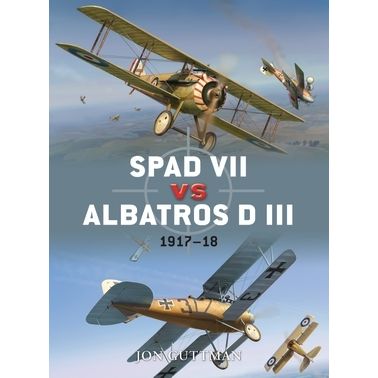
Description: When originally conceived, the French SPAD VII and German Albatros D II represented steps away from an emphasis on maneuver in aerial combat in favor of speed and durability - factors that came into play in hit-and-run tactics. At the end of 1916, however, Albatros tried to have the best of both worlds by incorporating the sesquiplane wing of the nimble Nieuport 17 into its D III. The result combined the better downward view and maneuverability of the Nieuport with the power and twin machine guns of the Albatros D II, but at a high price - a disturbing tendency for the single-spar lower wing to fail in a dive. While Albatros (and the Austrian Oeffag firm, which built the fighter under license)sought to alleviate that weakness with various reinforcing measures, the Germans developed tactics to maximize the D III's strengths and minimize its shortcomings. At the same time, the French worked to improve the SPAD VII with more power and a more reliable cooling system before moving on to the twin-gunned SPAD XIII. While all that was going on, the Albatros D III became a mainstay of the German and Austro-Hungarian air services in frequent encounters with SPAD VIIs flown by French, Belgian, British, Italian and American airmen.
MSRP: 17.95
Book Series: Duel
Volume: 36
Subject: Military History
Author: Jon Guttman
About the Author: A resident of Leesburg, Virginia, Jon Guttman is currently research editor for Weider History Publications. Specializing in World War I aviation, he has written eleven titles for Osprey including the popular Balloon-Busting Aces of World War I in the Aircraft of the Aces series.
ISBN-13: 9781849084758
Publisher: Osprey Publishing
Publication Date: 4/19/11
Number of Pages: 80
Binding: Paperback
Illustrator: Jim Laurier
UPC: 9781849084758
Set: Osprey Books
Rarity: sealed
When originally conceived, the French SPAD VII and German Albatros D II represented steps away from an emphasis on maneuver in aerial combat in favor of speed and durability - factors that came into play in hit-and-run tactics. At the end of 1916, however, Albatros tried to have the best of both worlds by incorporating the sesquiplane wing of the nimble Nieuport 17 into its D III. The result combined the better downward view and maneuverability of the Nieuport with the power and twin machine guns of the Albatros D II, but at a high price - a disturbing tendency for the single-spar lower wing to fail in a dive. While Albatros (and the Austrian Oeffag firm, which built the fighter under license)sought to alleviate that weakness with various reinforcing measures, the Germans developed tactics to maximize the D III's strengths and minimize its shortcomings. At the same time, the French worked to improve the SPAD VII with more power and a more reliable cooling system before moving on to the twin-gunned SPAD XIII. While all that was going on, the Albatros D III became a mainstay of the German and Austro-Hungarian air services in frequent encounters with SPAD VIIs flown by French, Belgian, British, Italian and American airmen.
View full details